Avoid your inquiry is delay response, please enter your WhatsApp/Skype along with the message, so we can contact you at the very first time.
We will reply you within 24 hours. If for urgent case, please add WhatsApp/WeChat: ,. Or call directly.
Picking the wrong lash can waste money, upset clients, and even stress the lash line. Many buyers still mix up cluster lashes and volume lash systems. The fix is simple: understand how they are built, how they are worn, and who they are really for.
The short answer is this: cluster lashes are small groups of lash fibers joined together at the base and placed along the lash line for short-term wear, while volume lash extensions use lightweight fans attached to one natural lash for a more controlled, semi-permanent result. Cluster styles are faster and easier. Volume styles are usually safer, more refined, and more long-lasting when applied correctly.
What are cluster lashes, and why do buyers confuse them with extensions?
What is a volume lash and how is it different from an individual lash system?
What is the main difference between cluster lashes and volume styles?
How are cluster lashes and volume lash extensions applied?
Which option gives a more natural look?
Which one lasts longer for clients and end users?
Are clusters more likely to cause damage to natural lashes?
What should a lash artist, lash technician, or salon buyer choose?
How should wholesalers, DTC brands, and private-label buyers compare cluster and volume products?
Why do global lash buyers work with a high-quality manufacturer in China?
Let’s start with the basic definition. Cluster lashes are small bundles or groups of lash fibers that are fused together at the base. These cluster eyelashes are placed in sections rather than one by one. On many retail and DIY systems, the bundles sit close to or slightly under the lash line, and they are meant to build fast fullness with less time and less technical skill. YLHT’s own education pages describe clusters as small grouped sections placed along the lash line, often for short, temporary wear.
This is where confusion starts in the world of eyelash extensions. Many buyers hear “clusters,” “DIY,” “express,” “individual,” and “extension” and think they all mean the same thing. They do not. Some cluster lash extensions are sold for home users. Some are used in quick beauty services. Some are even commonly referred to as party lashes, or referred to as party lashes, because they are often chosen for special occasions rather than full professional retention cycles.
From my side as a high-quality eyelash products manufacturer and exporter based in China, I see this mix-up often with beauty supply wholesalers, DTC brands, makeup artist teams, and salon buyers. The product may look fluffy in a photo, but the buying decision changes once you ask three simple questions: where is it placed, how long is it meant to be worn, and what type of adhesive system does it need? Those questions are what separate a fast cosmetic enhancement from a professional lash service.
A volume lash system belongs to the professional eyelash extension family. In volume work, a trained lash artist uses ultra-fine extensions to build a fan, then attaches that fan to one natural lash. YLHT’s volume guide explains it clearly: classic uses one extension on a single natural lash, while volume uses multiple fine extensions on the same lash to create a softer, denser result.
That means a single lash classic method and a volume lash method are not the same thing, but both fall under the broader category of individual lash extensions. Classic is one-to-one. Volume uses carefully balanced volume fans. Some sets are 2D to 6D. Some push into mega volume when even finer fibers are used. The key point is that the fan is still attached to one natural lash, not glued across skin or across several lashes at once.
So when buyers talk about cluster lashes vs individual lashes, they are really comparing two different systems. One is a grouped shortcut for quick fullness. The other is a professional isolation method. That is the heart of the differences between cluster and individual application, and it matters for retention, comfort, and safety.
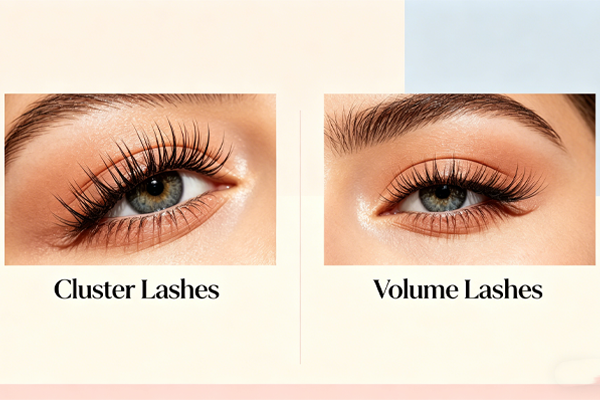
The main difference between cluster styles and volume styles comes down to build, placement, and purpose. Cluster lashes are usually made as pre-grouped sections. They give fast drama. They are often designed for short-term wear. Volume lashes, on the other hand, are built to create a cleaner, more professional result that follows the movement of each natural lash.
Here is a simple comparison table:
| Feature | Cluster lashes | Volume lashes |
|---|---|---|
| Build | Small bundles of multiple lashes fused at the base | Fine fan placed on one natural lash |
| Placement | Often placed along the lash line in sections | Isolated and bonded lash by lash |
| Wear goal | Fast glam, temporary beauty | Professional, softer, fuller, more structured wear |
| Skill level | Beginner to moderate | Advanced technician skill |
| Retention | Shorter | Usually longer |
| Best for | DIY, events, fast beauty | Salon clients, repeat fills, pro services |
This is why the debate between cluster lashes and volume systems should not be reduced to “which is prettier.” The better question is: what is the right lash for the right use? If you use clusters for overnight event beauty, they can make sense. If you want a refined full set that moves better with the growth cycle, volume extensions are the better tool.
How lashes are applied changes almost everything. With cluster and individual lashes, the biggest difference is precision. In a cluster system, the user places a ready-made section near or under the lash line. The base of the cluster is thicker because several fibers are already fused. That makes application faster, but it also raises the chance of skin contact if the user places too much product too close to the eyelid. YLHT’s comparison content specifically notes that cluster application is faster but less precise.
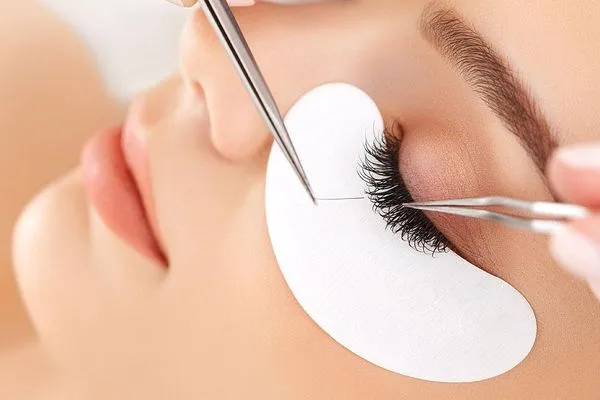
By contrast, individual lash extensions and volume lash extensions require isolation. A trained lash technician or technician separates one lash, then applies a fan with eyelash extension adhesive. In other words, a professional lash extension method is not just “more lashes.” It is more control. That is why individual extensions and volume work take longer but usually wear better and feel cleaner when done correctly.
There is also the glue question. Many retail clusters use a consumer-facing lash adhesive system. Professional services use eyelash extension glue designed for salon performance. Some medical literature and case reports have linked false lash and extension glue exposure to allergic blepharitis, eyelid swelling, and allergic contact reactions, including cases involving cyanoacrylate-containing products.
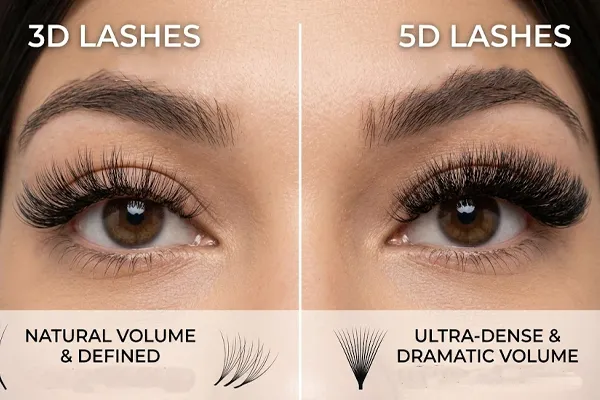
If a client wants the most polished natural look, well-applied volume usually wins. That may sound strange because volume sounds heavier, but professional volume is built with ultra-fine fans. When the weight is balanced and the lash map is clean, volume eyelashes can create a soft, fluffy line instead of a blocky one. Even 2D or 3D fans can make a fuller lash effect without looking stiff.
Clusters can still look beautiful. In fact, many modern pre-made or premade cluster products are lighter and softer than older party-lash styles. YLHT’s product pages highlight segmented DIY clusters as lightweight and beginner-friendly, which helps them sit better and feel less heavy than traditional one-piece strips. But because the base is thicker, clusters can still look less seamless than volume when viewed up close.
That is why I usually frame cluster and volume like this: clusters are ideal when speed matters most; volume is ideal when finish matters most. If the goal is social content, events, and flexibility, clusters work. If the goal is a salon-grade lash look that blends with each natural eyelash, volume is usually the smarter choice.
This part is simple. Volume systems are usually more long-lasting. YLHT’s volume guide says most clients book fills every 2–3 weeks, with full refreshes commonly around 4–6 weeks depending on care and lash shedding. That is what most buyers expect from a semi-permanent beauty service.
Clusters, by contrast, usually last much less time. YLHT’s lash-cluster guide states that clusters typically last about 1–7 days depending on the system and care. That makes them perfect for weekends, weddings, travel, and campaigns, but not a direct substitute for proper salon retention. This is the part many end users miss when they compare cluster lashes vs volume systems only by photo.
So if someone asks, “Can I get a volume result from clusters?” the honest answer is: visually, sometimes yes; structurally, no. One is made for fast beauty. The other is made for retention. That is one of the most important things to remember when comparing cluster lashes and volume lashes.
They can be, especially when used the wrong way. EyeWiki notes that lash extensions and glue can be associated with allergic blepharitis, eyelid swelling, corneal irritation, and traction alopecia, which is lash loss caused by pulling force on the lash follicle. It also notes that traction can damage follicles and stunt regrowth.
That does not mean clusters are automatically harmful. It means using cluster lashes carelessly can raise the chance of problems. When a thicker base is glued across several natural lashes, or when too much lash adhesive creates extra tension around the lash, the lashes may not shed freely. That can increase the risk of damage to natural lashes, eyelash loss, and even, in severe follicle-damaging scenarios, concerns around permanent hair loss.
Adhesive chemistry matters too. The American Academy of Ophthalmology warns that extension glue and tapes can trigger allergic reactions with pain, itching, redness, and swelling, and published dermatology reports have documented contact dermatitis linked to cyanoacrylate-containing false lash glue. This is why good training, proper patch-awareness, clean isolation, and the right remover matter so much.
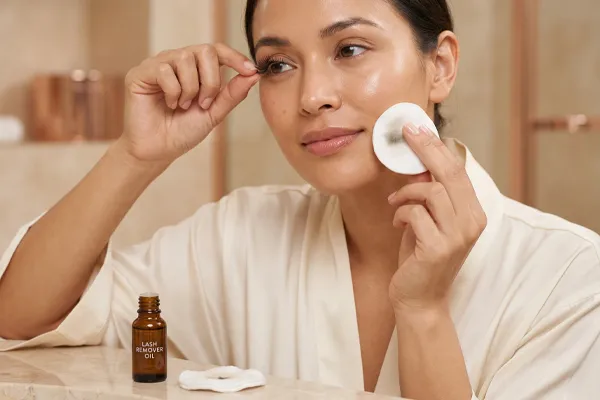
For a salon, the answer is usually volume or other professional extension systems, not cluster-first services. A trained lash professional wants consistency, refill logic, and better retention. Volume allows more control over lash length, density, and mapping. It also gives the client a more stable experience if they are planning to keep wearing extensions rather than just wear them for one night.
That said, some studios still sell clusters as add-ons, event lashes, or fast beauty services. There is room for both. A busy lash technician may keep clusters for temporary requests and express eyelash extensions in salons-style demand, while reserving volume services for core appointments. The key is to explain the difference clearly before application.
I always tell pro buyers to think in service menus, not only SKU lists. Some clients want a natural look. Some want full volume. Some want bold drama for special occasions. Matching product type to service intent helps avoid complaints and increases repeat orders.
For B2B buyers, this is not only a beauty question. It is a catalog question. Beauty supply wholesalers need products that are easy to explain and easy to reorder. E-commerce beauty brands need clear positioning. Brick-and-mortar retailers, MUA networks, bridal studios, training academies, and subscription beauty boxes all serve different use cases. That is why a strong product mix usually includes both cluster-ready items and professional extension products. YLHT’s site itself reflects that broad range across clusters lashes, strip lashes, tools, and professional extensions.
If you sell DIY beauty, clusters often move faster because they feel accessible. If you sell to salons, academies, and pro artists, volume products and extension trays matter more. If you serve both, the smartest move is not picking one side in cluster lashes vs individual lashes. It is building a tiered line: quick-glam products for retail, pro-grade trays for service providers, and educational content that helps buyers understand understanding the difference.
That is also why internal education matters. A buyer who reads your guide to volume eyelash extensions and then browses your eyelash extensions collection is more likely to buy the right system than someone who lands on one random product page. The same goes for DIY buyers who need a clear cluster lashes collection and a softer retail-friendly strip lashes collection.
Because supply matters just as much as style. YLHT’s site states that Qingdao Yuelinhengtong International Trade Co., Ltd. is a professional exporter and supplier of eyelash products based in Qingdao, with a mature supply chain, quality assurance system, and OEM/ODM support. The site also shows a broad product structure covering extensions, strip styles, clusters, tools, and packaging.
From my experience, that matters to every buyer group in your target market: wholesalers, salons, private-label brands, schools, makeup teams, spa chains, wedding planners, and influencer-led lines. They do not only need pretty lashes. They need stable curl, clean bases, reliable packaging, fast communication, and manufacturing that can support repeat orders. That is where a direct factory-oriented partner becomes more valuable than a random trading listing.
If you want to turn comparison content into real business, do not stop at education. Guide the reader toward the next action. Invite them to explore about YLHT Lash, learn how eye shape changes lash mapping in this guide to the best lash shape for your eye shape, and send wholesale or OEM inquiries through Contact YLHT. That is how content moves from traffic to trust to conversion.
Are cluster lashes the same as volume lashes?
No. Cluster lashes are grouped sections placed in pieces, while volume lash extensions are fans attached to one natural lash. They may look similar in photos, but they are built and worn in very different ways.
Are cluster lashes safer than volume lash extensions?
Not necessarily. Safety depends on placement, weight, glue choice, and removal. Clusters can be fine for short wear, but poor application can stress multiple lashes at once. Professional volume work is usually more controlled when done properly.
Do cluster lashes last as long as volume lash extensions?
No. Clusters are typically short-term wear, while professional volume sets are designed for longer retention with fills.
Which one looks more natural?
In most cases, volume applied by a skilled professional looks more seamless and more natural. Clusters can still look soft and pretty, especially newer lightweight styles, but volume usually blends better at close range.
Are cluster lashes good for beginners?
Yes. Many DIY cluster products are beginner-friendly and easier to place than full salon-style extension work. They are often a good entry point for short-term beauty use.
What should professional buyers stock?
Most should stock both. Keep cluster products for retail, bridal, and event-driven demand. Keep pro extension trays for salons, academies, and lash artists who need better retention and customization.
Cluster lashes are fast, flexible, and usually made for short-term wear.
Volume lashes are professional extension systems built on one natural lash at a time.
The biggest difference between cluster lashes and volume lashes is structure, placement, and retention.
Clusters are great for DIY beauty, event looks, and quick fullness.
Volume is usually better for a refined result, stronger retention, and professional salon services.
Poor placement, excess glue, and bad removal can increase the risk of irritation and lash damage.
For B2B buyers, the best strategy is usually not either-or. It is a smart product mix plus strong education.
A reliable manufacturer should offer quality control, OEM/ODM support, stable supply, and clear communication.

 English
  Spanish
  German
  French
  Arabic