Si votre demande n'est pas traitée dans les plus brefs délais, veuillez indiquer votre adresse WhatsApp/Skype dans le message, afin que nous puissions vous contacter dès la première fois.
Nous vous répondrons dans les 24 heures. En cas d'urgence, veuillez ajouter WhatsApp/WeChat : ,. Ou appelez-nous directement.
Jeter chaque grappe après une seule utilisation peut être considéré comme un gaspillage. Les réutiliser sans précaution peut être encore pire. Des fibres sales, des bases déformées et des restes de colle peuvent ruiner rapidement le prochain jeu. La solution intelligente est simple : ne réutilisez que les grappes qui semblent encore propres, souples et structurellement saines.
Oui, il est parfois possible de réutiliser des faisceaux de cils individuels, mais uniquement s'ils se détachent proprement, s'ils conservent leur forme et s'ils sont nettoyés avec soin. La formation sur les cils de la YLHT indique que de nombreux modèles de faisceaux sont lavables et réutilisables, mais elle précise également qu'un nouvel ensemble donne généralement le résultat final le plus propre. Les produits destinés au contour des yeux doivent également faire l'objet d'une attention particulière, car la FDA et l'AAO préviennent que les cosmétiques et les adhésifs utilisés autour des yeux peuvent provoquer des irritations ou des infections s'ils sont mal manipulés.
Que sont les faisceaux de cils individuels ?
Les cils en grappe peuvent-ils vraiment être réutilisés ?
Combien de fois pouvez-vous les réutiliser ?
Qu'est-ce qui fait qu'un cluster est réutilisable ou non ?
Comment retirer les grappes si vous voulez les porter à nouveau ?
Comment nettoyer et stocker les grappes réutilisées ?
Quelles sont les erreurs qui ruinent les cils en grappe réutilisables ?
Les cils en bandes ou les cils en grappes sont-ils meilleurs pour une utilisation répétée ?
Quand faut-il cesser de réutiliser un ensemble de grappes ?
Que doivent rechercher les acheteurs B2B dans les produits réutilisables pour les cils ?
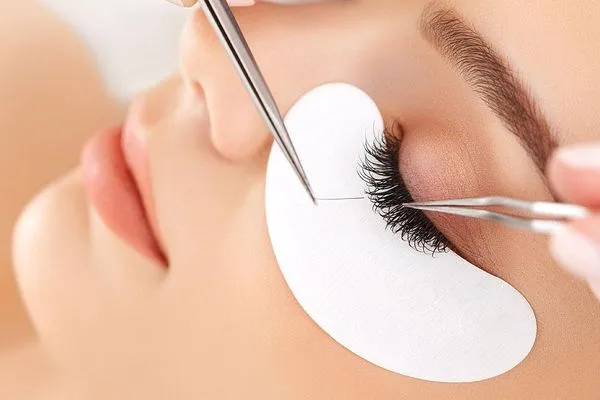
Un faisceau est une petite section de fibres de cils réunies à la base. Au lieu d'une bande complète, vous placez plusieurs petits morceaux aux endroits où vous souhaitez plus de forme ou d'ampleur. Cela permet au porteur de mieux contrôler l'espacement, la densité et le style. Sur le site d'YLHT, les produits en grappe côtoient les bandes de cils, extensions de cils, Les produits de la marque, les outils et l'emballage montrent comment ils s'intègrent à la fois dans la beauté à domicile et dans l'offre de cils B2B.
Cette position intermédiaire fait partie de leur attrait. Une bande complète est rapide, mais moins flexible. Un service d'extension de cils en salon peut donner l'impression d'être sans couture, mais il coûte plus de temps et d'argent. Les pièces en grappe offrent un équilibre. Ils sont suffisamment rapides pour les bricoleurs et suffisamment flexibles pour les détaillants en produits de beauté, les studios de pose de cils et les marques privées qui souhaitent plus d'un format de cils simple. YLHT se décrit comme un exportateur et fournisseur de cils basé à Qingdao, avec un service OEM/ODM, un MOQ flexible et une gamme de produits comprenant des cils en faisceau, des cils en bande, des extensions, des boîtes et des outils.
En d'autres termes, les grappes ne sont pas seulement une tendance en matière de beauté. Ils constituent un format de produit pratique pour un large éventail d'acheteurs.
C'est possible, mais pas toujours. La YLHT affirme que de nombreux cils en grappe sont lavables et réutilisables, surtout s'ils sont manipulés avec soin et maintenus propres. Dans le même temps, le guide d'application indique également qu'un nouvel ensemble donne généralement le meilleur aspect, le plus frais. Ces deux idées ne sont pas contradictoires. Elles sont la réponse au monde réel. La réutilisation est possible, mais elle n'est pas automatique.
La question clé n'est pas “Puis-je réutiliser ceci ?”. La question clé est : “Dois-je le réutiliser ?” Si les fibres sont encore souples, que la base est encore nette et qu'il n'y a pas d'accumulation importante de produit, la grappe peut encore valoir la peine d'être sauvée. Si la base est déformée, que les fibres sont tordues ou que de la colle usagée s'est déposée sur les racines, il est généralement préférable d'arrêter. La FDA indique que les produits cosmétiques pour les yeux sont généralement sûrs lorsqu'ils sont utilisés correctement, mais qu'une mauvaise utilisation peut permettre la prolifération de bactéries ou de champignons et entraîner une infection. L'AAO affirme également que les extensions de cils et les produits connexes ne sont sûrs que si les gens prennent des précautions.
C'est pourquoi la réutilisation intelligente est moins une question d'économie d'argent qu'une question de jugement.
Il n'existe pas de chiffre universel honnête. La réponse dépend de la qualité des fibres, de l'accumulation de colle, des habitudes de maquillage et de la douceur avec laquelle les grappes ont été retirées. La formation sur les grappes d'YLHT indique que de nombreuses grappes sont réutilisables, tandis que son contenu plus large en matière de cils suggère que bandes de cils sont généralement plus usés que les petites sections en grappe, car les grappes sont plus faciles à plier ou à surcharger de produits.
Une façon pratique d'envisager les choses est de les considérer en fonction de leur état et non de leur nombre. Certaines pièces en grappe peuvent encore avoir fière allure après avoir été utilisées et nettoyées avec soin. D'autres peuvent être abîmées dès la première usure. Les petites pièces sont plus faciles à endommager car la base est plus petite et les fibres plus légères. Dès que la base n'est plus plate ou que les fibres ne se déploient plus en éventail, la valeur de réutilisation chute rapidement.
Voici une comparaison simple :
| Type de cils | Potentiel de réusinage | Principale raison de l'échec |
|---|---|---|
| Cils en bande de première qualité | Généralement le plus élevé | Accumulation de colle sur la bande |
| Pièces individuelles de la grappe | Modéré | Base courbée, fibres collées, racines encrassées |
| Extensions de cils appliquées en salon | Non réutilisable par le consommateur | Attaché au cycle naturel des cils |
C'est pourquoi le terme “réutilisable” doit toujours être considéré comme une possibilité de qualité, et non comme une garantie.
Une grappe réutilisable présente généralement quatre caractéristiques : une base propre, des boucles intactes, des fibres séparées et un mouvement doux. Si ces quatre éléments sont toujours présents après le prélèvement, il peut être intéressant de les conserver. Si l'un d'entre eux a disparu, en particulier la forme de la base, il se peut que la grappe ne tienne plus bien et n'ait plus l'air fraîche.
C'est la base qui compte le plus. Lorsque l'adhésif séché forme des grumeaux épais, la grappe perd son point de contact propre. L'application suivante devient alors irrégulière. Les fibres sont également importantes. Une bonne grappe doit rester légère, équilibrée et facile à porter. S'il est rigide ou sale, le résultat se verra à l'œil.
Le contenu de l'YLHT fournit un indice utile à cet égard. Ses guides sur les grappes mettent l'accent sur la réutilisation, mais aussi sur une manipulation soigneuse et des ensembles neufs pour une meilleure finition. C'est exactement ce que les acheteurs expérimentés pensent de l'usure répétée : réutilisable lorsqu'elle est propre, remplaçable lorsqu'elle ne l'est pas.
Une bonne réutilisation commence par un retrait en douceur. Si vous retirez les grappes trop rapidement, vous risquez de déformer la base, de casser le motif de la fibre ou de stresser le cil naturel qui se trouve en dessous. Le guide d'application d'YLHT indique que le retrait des grappes doit se faire patiemment en commençant par assouplir le lien, puis en faisant glisser les morceaux au lieu de les arracher.
Cela est important pour deux raisons. Premièrement, elle protège le cluster lui-même. Deuxièmement, il protège le zone des yeux. La FDA conseille aux utilisateurs de garder les produits cosmétiques pour les yeux propres et de faire attention lorsqu'ils les appliquent ou les enlèvent, car la zone des yeux est sensible. L'AAO va dans le même sens : il faut prendre des précautions avec les extensions, les adhésifs et les cosmétiques pour les yeux.
Une méthode de retrait simple est la plus efficace :
Cette petite patience permet généralement de décider si une grappe peut être portée à nouveau.
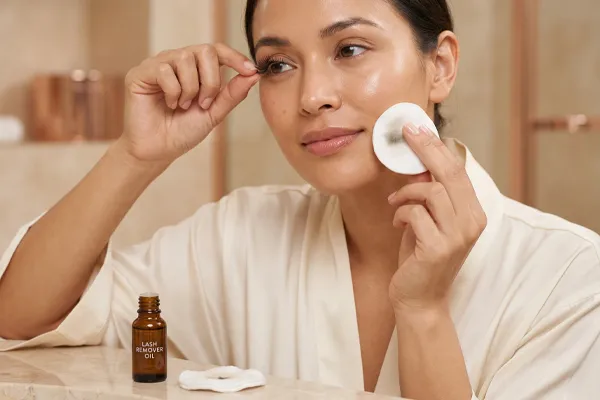
Une fois les grappes enlevées, l'objectif n'est pas de les frotter. L'objectif est d'enlever les résidus sans abîmer la structure. Commencez par une surface propre. Laissez les grappes reposer de façon à ce que vous puissiez voir clairement la base. Ensuite, soulevez délicatement la colle qui s'est détachée. Si les fibres semblent encore souples et ouvertes, continuez. Si elles ont déjà l'air aplaties, il est généralement préférable de les remplacer.
La formation de YLHT sur les cils rappelle constamment l'importance d'une application propre et d'une manipulation soigneuse, et ce même principe s'applique au nettoyage. Les fibres sales, le mascara épais et les vieux liens sont les principales raisons pour lesquelles les faisceaux réutilisés cessent d'être beaux. Plus le premier port a été propre, plus le second est facile à porter.
Le stockage est également important. Si vous voulez que les grappes réutilisées conservent leur forme, ne les jetez pas en vrac dans un tiroir. Un plateau stable ou une boîte d'accrochage permet d'organiser les pièces et d'éviter que les bases ne soient écrasées. Le site d'YLHT propose des boîtes d'arrimage et des boîtes pour ensembles de grappes dans le cadre de son système de produits, ce qui répond exactement à ce besoin.
La plus grande erreur est d'essayer de sauver des cils qui sont déjà trop sales. Si une grappe est pleine de colle, de maquillage, d'huile ou de débris, le port suivant en vaut rarement la peine. La réutilisation doit rendre le processus plus efficace, pas moins hygiénique.
La deuxième erreur est de trop manipuler. Plus vous pincez, grattez, tordez et tirez, plus vous risquez d'abîmer la base. Les petites sections de grappes sont moins tolérantes qu'une bande complète. C'est l'une des raisons pour lesquelles le contenu de l'YLHT sur les grappes ne cesse de lier les bons résultats à une préparation minutieuse, une usure minutieuse et un enlèvement minutieux.
La troisième erreur consiste à pousser trop loin la réutilisation. Une grappe tordue ou éraflée peut encore “fonctionner”, mais elle ne s'usera pas bien et ne se sentira pas bien près de la paupière. À ce stade, la réutilisation n'est pas une tactique d'économie intelligente. Il s'agit simplement d'un mauvais échange.
Dans le cas d'une utilisation répétée, une bande de haute qualité a généralement l'avantage. Une bande complète est plus facile à nettoyer, plus facile à ranger et plus facile à manipuler sans plier les sections individuelles. C'est la raison pour laquelle les bandes de cils durent souvent plus longtemps que les bandes entières.
Les cils en grappe présentent néanmoins un avantage : la personnalisation. Ils vous permettent de créer un look plus personnalisé et de remplir exactement les zones que vous souhaitez. Si l'objectif est de contrôler la forme, les faisceaux l'emportent. Si l'objectif est une tenue maximale, les bandes l'emportent souvent. YLHT vend les deux types de produits et publie également du contenu comparant les deux types de cils. les cils individuels et les bandes de cils, ce qui montre que de nombreux acheteurs souhaitent disposer des deux options dans une même gamme de produits.
C'est également la raison pour laquelle ce sujet fonctionne mieux lorsque vous le traitez comme une question de choix de produit, et non comme une simple question de beauté par oui ou par non.
Arrêtez-vous lorsque la grappe n'a plus d'allure ou de consistance. Il peut s'agir d'une base courbée, de racines agglutinées, d'une texture rugueuse, d'une boucle inégale ou de tout ce qui fait que la pièce est mal placée sur l'œil. Le contour de l'œil est trop sensible pour que l'on se contente d'un “peut-être assez bon”.”
Il ne s'agit pas seulement d'une décision esthétique. Il s'agit d'une décision de sécurité. La FDA indique que les produits cosmétiques pour les yeux mal utilisés peuvent être contaminés et provoquer des infections, et l'AAO rappelle aux consommateurs qu'ils doivent se protéger lorsqu'ils utilisent des produits de renforcement des cils et des adhésifs.
Une simple liste d'arrêts est utile :
Dans ce cas, le remplacement est le meilleur choix.
Pour les acheteurs B2B, la réutilisation n'est pas seulement une caractéristique. Il s'agit d'une revendication de positionnement. Si vous affirmez qu'un produit est réutilisable, le produit doit soutenir cette affirmation avec une qualité de fibre stable, une base cohérente, un emballage pratique et des conseils d'entretien clairs. Dans le cas contraire, la promesse génère plus de plaintes que de commandes répétées.
YLHT se positionne en tant que fournisseur de cils basé en Chine avec un service OEM/ODM, un MOQ flexible et une large gamme de produits pour les acheteurs internationaux, y compris des grappes, des bandes, des boîtes et des outils. Cela est important car les produits réutilisables ont besoin d'un système complet autour d'eux, et pas seulement d'un plateau de cils. Le stockage, la manipulation, les outils et des instructions simples sont autant d'éléments qui influencent l'expérience du client en matière de réutilisation.
Pour les grossistes, les marques DTC, les salons, les écoles et les détaillants en produits de beauté, la liste de contrôle la plus utile se présente comme suit :
| Ce qu'il faut évaluer | Pourquoi c'est important |
|---|---|
| Résilience des fibres | Aide à maintenir la forme après la première utilisation |
| Cohérence de la base | Facilite le nettoyage et la réapplication |
| Soutien à l'emballage | Protège la forme entre les utilisations |
| Des instructions d'entretien claires | Réduction des abus et des retours |
| Flexibilité OEM/ODM | Aide à faire correspondre le produit au positionnement de la marque |
C'est là que la valeur d'un fabricant se manifeste. Les grappes réutilisables se vendent mieux lorsque la qualité du produit et les conseils d'utilisation correspondent réellement au marketing.
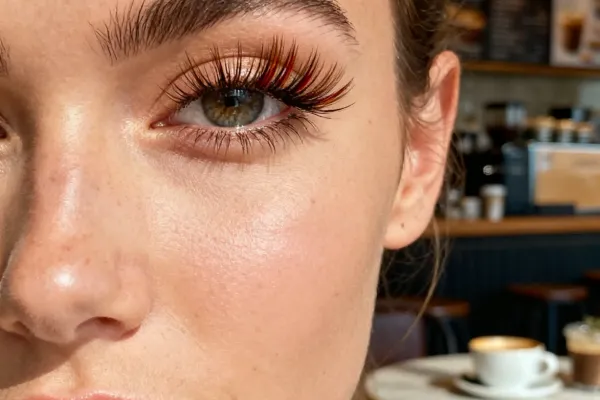
cils bruns avec quelques fibres rouge-brun
Peut-on réutiliser les faisceaux de cils individuels ?
Oui, parfois. Le YLHT indique que de nombreux cils en grappe sont lavables et réutilisables, mais il précise également qu'un nouveau cil donne généralement le meilleur résultat. La réutilisation dépend de la forme, de la propreté et d'une manipulation soigneuse.
Comment savoir si un cluster est encore réutilisable ?
Vérifiez la base, les fibres et le toucher. Si la base est nette, que les fibres sont séparées et que la grappe reste douce et propre au toucher, elle peut encore être utilisée. Dans le cas contraire, remplacez-la.
Les faisceaux réutilisables sont-ils aussi durables que les bandes de cils réutilisables ?
En général, non. Les bandes de cils tolèrent souvent plus de rechutes car la bande complète est plus facile à nettoyer et à ranger. Les faisceaux offrent une plus grande souplesse de coiffage, mais les petites sections sont plus faciles à déformer.
Les paquets de cils sales peuvent-ils endommager le contour des yeux ?
Ils peuvent augmenter les risques. Selon la FDA, les produits cosmétiques pour les yeux mal utilisés peuvent favoriser la croissance bactérienne ou fongique et provoquer une infection lorsqu'ils sont appliqués près de l'œil.
Peut-on continuer à réutiliser les grappes jusqu'à ce qu'elles se désagrègent ?
Non. Lorsque la base est déformée, que les fibres s'agglutinent ou que la pièce est rugueuse, il est préférable d'arrêter. Le contour des yeux est trop délicat pour une réutilisation douteuse.
Les cils en grappe réutilisables sont-ils un bon produit B2B ?
Oui, lorsque le produit est bien fabriqué et que les instructions d'entretien sont claires. La réutilisation peut être un argument de vente fort pour les grossistes en produits de beauté, les marques privées, les salons et les acheteurs au détail lorsque l'allégation est étayée par les performances réelles du produit.
Certains cils en faisceau peuvent être réutilisés, mais ce n'est pas le cas de tous les cils.
Une base propre et une forme de fibre intacte sont plus importantes qu'une usure supplémentaire.
Un enlèvement en douceur est la première étape d'une réutilisation réussie.
Les grappes sales ou endommagées doivent être jetées, et non pas forcées à être utilisées pour une autre application.
Les produits destinés à la zone oculaire doivent faire l'objet d'une hygiène rigoureuse et d'une manipulation prudente.
Pour les acheteurs B2B, les allégations réutilisables ne fonctionnent que si la qualité du produit et les conseils d'entretien les soutiennent.

 French
  English
  Spanish
  German
  Arabic